
Wooden Spice Box vs Stainless Steel Masala Box: Which Is Better for an Indian Kitchen?
A practical comparison of wooden and stainless steel masala boxes by everyday use, spice organisation, moisture care, kitchen style and gifting value.
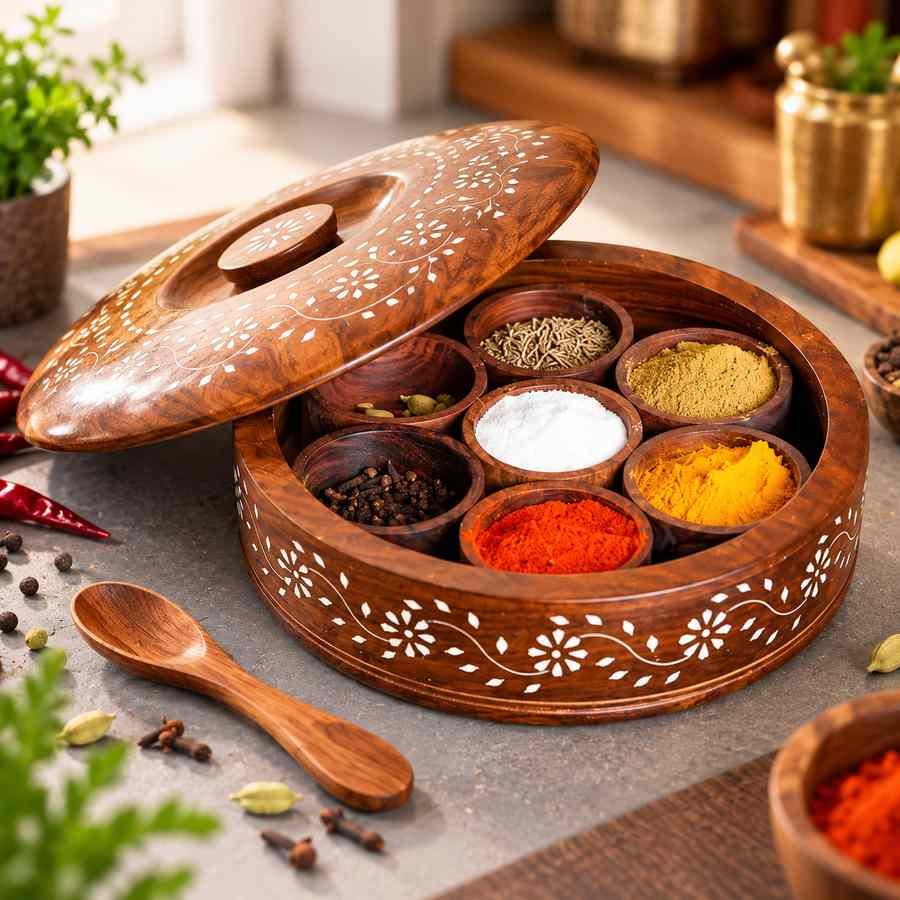
Neither material is automatically better for every kitchen. Choose a wooden spice box when you want natural material, handcrafted character, organised spice storage and a warm kitchen aesthetic. Choose stainless steel when your priority is straightforward utility, moisture resistance and low-maintenance metal storage.
1. Wooden vs stainless steel: the main difference
The biggest difference is the balance between appearance, material feel and everyday practicality. Wooden masala boxes bring a natural, handcrafted look to the kitchen, while stainless steel boxes are typically chosen for their simple, utilitarian character.
For an Indian kitchen, both can organise frequently used spices effectively. The better choice depends on where you keep the box, how often you cook and how you prefer to maintain your kitchenware.
2. Compare the two materials
At a Glance
Wooden: natural, warm, handcrafted, suited to traditional and natural-wood kitchens, and attractive for gifting.
Stainless steel: modern, utilitarian, moisture-resistant and generally easier to handle around wet kitchen conditions.
Do not choose only by material. Check compartment count, actual dimensions, lid design, cleaning requirements and where the box will sit in your kitchen.
3. When a wooden spice box makes more sense
A wooden masala box is a strong choice when you want everyday spice storage to feel like part of the kitchen rather than just another container. Natural wood also works well with traditional Indian interiors and handcrafted home products.
LEVASTO offers wooden spice boxes in different compartment configurations, including 9-container and 6-container hexagonal designs. The right configuration depends on the spices you use most often and the space available in your kitchen.
4. When stainless steel may be the better choice
Stainless steel may suit you better if your kitchen is frequently exposed to moisture, if you prefer a low-maintenance utilitarian setup, or if you simply prefer the look and feel of metal storage.
It is worth considering when you want a container that can be handled more casually around everyday moisture than natural wood. Always follow the care and cleaning instructions for the specific product you buy.
5. Which one is better for spice organisation?
Material alone does not determine organisation. Compartment layout and capacity matter more. Start by counting the spices you actually use every day, then choose a box that gives you easy access without excessive unused space.
- Count your regular spices. Choose around your real cooking routine.
- Check the dimensions. Make sure the box fits your shelf or countertop.
- Review the compartment layout. Fixed and removable layouts suit different routines.
- Consider refill frequency. Working quantities are often more practical than oversized storage.
6. What about cleaning and moisture?
Wood needs more deliberate care than stainless steel. Keep a wooden spice box dry, wipe spills promptly and avoid prolonged exposure to water or steam. Do not assume a wooden box is dishwasher-safe unless the manufacturer specifically says so.
Stainless steel is generally easier to manage around moisture, but it still needs appropriate cleaning and drying. For either material, clean and completely dry compartments before refilling spices.
7. Which one is better for gifting?
If the box is intended as a housewarming, wedding, festive or Indian kitchen gift, a handcrafted wooden spice box can offer more decorative and traditional appeal. Stainless steel is usually selected more for practical everyday utility.
Our Take
For a buyer who values natural wood, handcrafted Indian design, spice organisation and kitchen presentation, a wooden spice box is a very good fit. If the main priority is simple utility and moisture-friendly maintenance, stainless steel may be the more practical option.
Frequently Asked Questions
Is a wooden masala box better than stainless steel?
It depends on your priorities. Wooden boxes offer natural material and handcrafted character, while stainless steel is often preferred for straightforward utility and moisture resistance.
How many compartments should a spice box have?
Choose according to the spices you use regularly. A smaller compartment count can be more practical if you cook with a focused set of spices.
Can I wash a wooden spice box in the dishwasher?
Do not assume that a wooden spice box is dishwasher-safe. Follow the care instructions provided for the specific product and avoid prolonged exposure to water.
Which material is better for a humid kitchen?
Stainless steel is generally more moisture-resistant. If you choose wood, keep it away from direct steam and splashing water and follow the product’s care instructions.
Explore More From LEVASTO
Explore the LEVASTO Wooden Spice Box collection for handcrafted storage designed around everyday Indian kitchen routines. You can also browse the LEVASTO India Journal for practical guides on wood, home, kitchen, wellness and gifting.
The right masala box is the one that matches your cooking routine. Choose wooden when natural material, handcrafted design and kitchen presentation matter; choose stainless steel when moisture resistance and simple utility are the bigger priorities.